Friday, May 23, 2014

The Jubilee Exhibition of works by architect Georgi Fingov in Sofia


ФАМИЛНИ КЪЩИ / FAMILY HOUSES

Георги Фингов, Киро Маричков 
Къща на Лаос/Адолф Функ, 1903 г. 
бул.  „Кн. Ал. Дондуков” 59 
с любезното съдействие на Алианц България
Georgi Fingov, Kiro Marichkov
Family House for Laos/Adolph Funk
59, Kniaz Alexander Dondukov B/d
with kind cooperation of Allianz Bulgaria Ltd.


Георги Фингов, 1907-08 г. 
Фамилна къща на Георги Фингов; Петко Теодоров
ул. „Шипка” 38 и ул. „В. Априлов”
 Georgi Fingov, 1907-08
Family House of Georgi Fingov, later of Petko Theodorov 
38 Shipka St., the corner with Vassil Aprilov St.

Гeорги Фингов; Киро Маричков 
Група къщи на Дренкови,
ул. „Сан Стефано”  
(дн. част от комплекса на 
дипломатическото представителство 
на Република Гърция в София)
Georgi Fingov, Kiro Marichkov
A group of houses for Drenkovs,
San Stephano St.,
(present diplomatic mission of Hellenic Republic in Sofia)

Гeорги Фингов; Киро Маричков
Къща на Генерал-майор Кирил Ботйов, 
ул. „Шипка” 23 и ул. „В. Априлов” 
Georgi Fingov, Kiro Marichkov
House for General-Major Kiril Botyov,
23 Shipma St., the corner with Vassil Aprilov St.


Гeорги Фингов; Киро Маричков
Къща на Братя Иванови, ул. „Ан. Кънчев” 
Georgi Fingov, Kiro Marichkov
House for Ivanov Brothers,
3, Angel Kanchev St.


Гeорги Фингов; Киро Маричков
Фамилна къща на Смедовски, ул. „Шипка” 
Georgi Fingov, Kiro Marichkov
Family House of Smedovsky,
Shipka St.


Гeорги Фингов; Димо Ничев; Никола Юруков, 
1910-14 г.
Хотел на Братя Конфино, 
ул. „Л. Леге/Льо Ге” 1 и „П. Алабин”
Georgi Fingov, Dimo Nichev, Nikola Jurukov, 
1910-14 
Hotel Lege Palace
1 Le Gue St., corner with Alabin St.

Гeорги Фингов
Къща и шоколадова фабрика на Аврам Чальовски,
 ул. „Отец Паисий” 41
Georgi Fingov,
Family house and chocolate factory of Avraam Chalyovsky
41 Otets Paisiy St.


Държавни и общински училища
State and Municipal Schools
Гeорги Фингов; Киро Маричков, 1903-06 г.
Трета софийска мъжка гимназия/18то СОУ „Уилиям Гладстон”
ул. „Пиротска”68
Georgi Figov, Kiro Marichkov
Third school for boys "William Ewart Gladstone"
68 Pirotska St.


Гeорги Фингов; Димо Ничев; Никола Юруков, 
1911-12 г.
20-то СОУ „Тодор Минков”, 
ул. „Княз Борис  I” 27 и „Ген. М. Скобелев”


Гeорги Фингов; Димо Ничев; Никола Юруков, 1911-12 г.
Трета софийска прогимназия
6-то СОУ „Граф Игнатиев”, 
ул. „6-ти Септември”
Georgi Fingov, Dimo Nichev, Nikola Jurukov, 1911-12
Third elementary school "Graf Ignatiev"
6th Septremvri St.

Гeорги Фингов; Димо Ничев; Никола Юруков, 
1911-12 г.
46-то СОУ „Константин Фотинов”, 
бул. „Хр. Ботев” 27


Гeорги Фингов; Димо Ничев; Никола Юруков, 
1911-12 г.
48-мо СОУ „Йосиф Ковачев”, 
ул. „Клокотница” 27 
Georgi Fingov, Dimo Nichev, Nikola Jurukov, 
1911-12
48th Elemetary School "Josif Kovachev"
27 Klokotnitsa St. 

Гeорги Фингов; Димо Ничев; Никола Юруков, 
1911-12 г.
38-мо СОУ „Васил Априлов”, 
ул. „Шипка” 40
Georgi Fingov, Dimo Nichev, Nikola Jurukov, 
1911-12
38th Elemenatry School "Vassil Aprilov"
40 Shipka St.

Гeорги Фингов; Димо Ничев; Никола Юруков, 
1911-12 г.
Основно училище „Антим I” (бивше), 
ул. „Дж. Горини” и „Оборище” 
(дн. офиси на служби към Столична община)
Georgi Fingov, Dimo Nichev, Nikola Jurukov, 
1911-12
"Antim I" Elementary School
Giovanni Gorini St., the corner with Oborishte St.

Административни сгради
Office Buildings
Гeорги Фингов, Киро Маричков
Дирекция на БДЖ 
(дн. Национален институт по стандартизация)
Georgi Fingov, Kori Marichkov
Bulgarian Railroads Headquarters

Гeорги Фингов; Димо Ничев; Никола Юруков
Търговско-индустриална камара,
ул. „Г. Бенковски” 2 и ул. „Славянска”
Georgi Fingov, Dimo Nichev, Nikola Jurukov
Commercial and Industrial Chamber
2 Benkovski St., the corner with Slavianska St.
 
Гeорги Фингов; Димо Ничев; Георги Апостолов
Кооперативен търговски дом, 
ул. Позитано 3 и ул. „П. Алабин” 33
Georgi Fingov, Dimo Nichev, Georgi Apostolov
3 Positano St. and 33 Alabin St.

Гeорги Фингов; Димо Ничев; Георги Апостолов
Клиника на д-р Стамболиев, 
ул. „Граф Игнатиев” и пл. „Дж. Гарибалди”
Georgi Fingov, Dimo Nichev, Georgi Apostolov
Dr. Stamboliev Clinic
Graf Ignatiev St, and Garibaldi Sq.


Гeорги Фингов; Димо Ничев; Георги Апостолов
Пражка кредитна банка 
(Застрахователно дружество „Австирийски Феникс”), 
бул. „Кн. Ал. Дондуков” 39
Georgi Fingov, Dimo Nichev, Georgi Apostolov
Prague Credit Bank
39 Dondukov B/d

Гeорги Фингов; Димо Ничев; Георги Апостолов
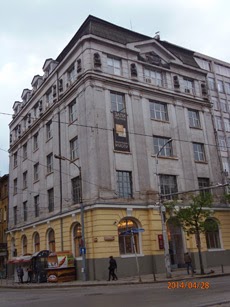
Застрахователно дружество 
„Български Феникс”, 
бул. „Кн. Ал. Дондуков” 21
Georgi Fingov, Dimo Nichev, Georgi Apostolov
'Bulgarian Phoenix' Insurance Company
21 Dondukov B/d

Гeорги Фингов; Димо Ничев; Георги Апостолов
Търговска банка  
(дн. Кооперативна търговска банка) , 
пл. „Дж. Гарибалди”
Georgi Fingov, Dimo Nichev, Georgi Apostolov
Commercial Bank
Garibaldi Sq.

Гeорги Фингов; Димо Ничев
Франко-белгийска банка, ул. „Л. Леге” 17
Georgi Fingov, Dimo Nichev
Franc-Belgian Bank
17 Le Gue St.

Гeорги Фингов; Димо Ничев
Централна кооперативна банка 
(надстрояване и дострояване), 
ул. „Ив. Вазов” 1, ул. „Г. Бенковски”
Georgi Fingov, Dimo Nichev
Central Cooperative Bank
1 Ivan Vazov St., corner with Benkovski St.

Wednesday, May 7, 2014

140th anniversary from the birth of the giant in Bulgarian 20th century architecture Georgi Fingov


The year 2014 marks the 140th anniversary from the birth of architect Georgi Fiongov - one of the most notable and productive Bulgarian architects of the 20th century.
  
Born in the town of Kalofer on May 1, 1874 (then May 13 according to Julian calendar) Georgi Fingov is a professional erudite and a bright representative of the Secession/Art Nouveau style in Bulgaria with a wide circle of acquaintances in the country and abroad.

A graduate of the Viennese Technische Hochschule (1892-98), he returned back home to contribute enthusiastically to his fatherland's prosperity regardless of the several invitations for an attractive job in Austria.
In 1903 Georgi Fingov co-founded the Bulgarian artistic society 'Savremeno izkustvo' (Contemporary Art), only six years after the etsablishment of the Viennese Secession Association.
Stylistically innovative entirely decorated and furnished edifices designed and built with the participation of Georgi Fingov demonstrate the leading artistic trends of the early 20th century which became exemplary models to follow. 
Georgi Fingov & Kiro Marichkov, Family villa for Adolph Funk in Sofia, 1903. 

Among the independent designs by Georgi Fingov are the small Princely hunting lodge in Vrana area by Sofia (1903) and his own family house in 38 Shipka St. in Sofia (1906-08). These are manifests of his credo and examples of a masterful local interpretation of the Secession style.
During his long years artistic life Georgi Fingov succeeded to achieve diversity of stylistic innovations while adapting to the changing reality. His creations illustrate successful cooperation with many other architects, namely Valko Valkovich, Kiro Marichkov, Friedrich Gruenanger, Dimo Nichev, Nikola Jurukov, Georgi Apostolov, Jordan Milanov, and his son Dimitar Fingov. 

Georgi Fingov is among the few patriarchs of Bulgarian architecture of the 20th century. His legacy of buildings dispersed all over the country is enormous in number and diversity.  
Most of his creations are located in Sofia and are monuments of culture forming the contemporary image of the Bulgarian capital city.

Fingov died during the bombardments of Sofia on the 10th of January 1944. 
He died after surviving two bankruptcies.
He died shortly after destroying in desperation his entire professional archive and four months before his 70th jubilee.

The celebration of the 140th anniversary from the birth of Georgi Fingov will take place at the Union of Bulgarian Architects Headquarters in 11 Krakra St., Sofia on the 13th of May 2014, at 5:30 PM.

Georgi Fingov, Fiongovs family villa in 38 Shipka St., Sofia.
Design of 1906-08 and contemporary views:


http://sofiazanas.blogspot.com/2014/05/140.html

Friday, March 21, 2014

Жанрова обособеност на архитектурния образ

Автореферат на дисертация,
защитена февруари 1989 г.


CONSERVATION OF MODERN HERITAGE IN DIFFERENT CONTEXTS

XI’AN DECLARATION
ON THE CONSERVATION OF MODERN HERITAGE
IN DIFFERENT CONTEXTS
This document was officially announced together by Docomomo international President Prof. Ana Tostoes and Docomomo China chair Prof. Kecheng Liu.

Adopted in Xi’an, China
by the 1st Council Assembly of Docomomo China and
Delegates of the 2013 Xi’an International Conference on Modern Architectural Heritage
“Other MoMo, Other Heritage”
on 10 October 2013


Preamble
Meeting in the ancient city of Xi’an on 8 October 2013, at the invitation of Xian University of Architecture and Technology on the occasion of the 1st Council Assembly of Docomomo China and the celebrations marking the foundation of Docomomo China Council and Docomomo China’s commitment in inheriting China’s longstanding endeavor to ensure the safeguard and conservation of modern cultural heritage as part of its sustainable and human development;
Benefiting from the broad range of discussions and reflections shared by professionals, historians, preservation officers, researchers and teachers from Docomomo International, ICOMOS and UIA during the 2013 Xi’an International Conference on Modern Architectural Heritage “Other MoMo, Other Heritage” and learning from a broad range of experience from China and world-wide authorities, institutions, and specialists in providing sufficient care and management for modern heritage buildings, sites and neighborhoods in appropriate methods and conservation/rehabilitation philosophy specific to each different cultural context;
Taking note of the international and professional interests in documentation and conservation of modern heritage in different context as expressed in the Eindhoven Statement (1990) and in many texts it has inspired, through International Docomomo Conferences, particularly the Fourth International Docomomo Conference “Universality and Heterogeneity“ at Sliac and Bratislava (1996) and the Ninth International Docomomo Conference “Other Modernisms“ at Istanbul and Ankara(2006) and also in international and national doctrines such as ICOMOS Xi'an Declaration on the Conservation of the Setting of Heritage Structures, Sites and Areas (2005) and Principles for the Conservation of Heritage Sites in China;
Stressing the need to address adequately the significance of context in the comprehension, definition, identification, interpretation, documentation and conservation of modern heritage, especially in the rapid transformation of buildings, sites and neighborhoods in globalization and also the widespread misunderstanding of modern movement as a total rupture with the cultural contexts;
Admitting that different understanding and interpretation of modernism based on varied cultural context forms a diverse global landscape of modernism in different context. Chinese modern architecture, as well as modern architecture in other region or in different cultural context is essential part to international modern heritage;
Participants of the 1st Council Assembly of Docomomo China and 2013 Xi’an International Conference on Modern Architectural Heritage -- “Other MoMo, Other Heritage” adopt the following Declaration of principles and recommendations, addressing it to members of Docomomo China, national and local authorities and all institutions and specialists to contribute through legislation, policies, planning and design practice, and management to better protect, conserve and sustain modern heritage buildings, sites and neighborhoods in their contexts.

1. The context of a modern heritage building, site or neighborhood is defined as the international, national or regional social, economic, technological, cultural and political background that has strong influence on, or contributes to, its significance and distinctive character.

2. The modern movement has known many different national, local and regional interpretations of universal principles. Buildings, sites and neighborhoods derive their significance and distinctive character from their representation of technical, social and aesthetical innovations that is closely related to their contexts.

3. Understanding, documenting and interpreting the context is essential to the definition, identification and assessment of modern heritage buildings, sites and neighborhoods.

4. The multiplicity and diversity in the nature of contexts requires interdisciplinary, cross-professional and integrative cooperation for its study, as a foundation to the assessment of heritage significance of modern heritage.

5. Based on research of the context of a modern heritage site, a site-specific documentation method should be devised and applied to record not only the building fabric but also its various connections to its context.

6. Given the far less attention modern heritage receives in the rapidly transforming cities, landscapes and society, interpreting, presenting and promoting modern heritage in context could better convey their representation of social, technical and aesthetical innovations and gain more understanding and support from the society.
Acknowledge the contribution of context to the significance of modern heritage: buildings, sites andneighborhoodsEncourage multi-disciplinary cooperation to establish context study for modern heritage
Identify and promote a systematic recording of modern heritage based on contextual researchBring the significance systematically of the modern heritage to the attention of the public, theauthorities, the professionals, and educational community by interpreting modern heritage incontext

7. Thorough heritage significance assessment of modern heritage through acontext-based method could reveal social, historic, artistic, aesthetic, scientific or othercultural value associated with its context. Besides commonly accepted universalmethod of heritage conservation, exclusive conservation approach should also beapplied to better preserve these context-specific values.

8. For the better understanding of the modern movement and its heritage, theawareness of the equal embodiment of universality and heterogeneity in modernheritage is essential. Positioning modern heritage in its context is indispensable inexploring and developing the knowledge of modern movement.

By the formulation of these recommendations to competent organisms and to the cultural world,the Assembly confirms the intention of Docomomo China to act and its readiness to promote andcooperate for the most rapid practical application of these recommendations.

Adopted in Xi’an (China) on the 10th October, 2013.


Ana Tostões (ed.), Modern Architecture in Africa:
Angola and Mozambique, Lisbon, IST, 2013


13 March, 2014, 17h, Main Hall of Instituto Superior Técnico, Lisbon


Ana Tostões (ed.),
Modern Architecture in Africa: Angola and Mozambique, Lisboa, IST, 2013.


Result of the research project intituled “EWV - Exchanging worlds visions:
modern architecture in Africa “Lusófona” (1943-1974)
looking through Brazilian experience established since the 1930s”,
led by prof. Ana Tostões at the Instituto Superior Técnico, Lisbon (2008-2013).

The launch is scheduled for March 13, 17.00,
in the Main Hall of Instituto Superior Técnico, Lisbon.
Book Lauch:
Ana Tostões (ed.), Modern Architecture in Africa: Angola and Mozambique, Lisboa, IST, 2013.

Result of the research project intituled “EWV - Exchanging worlds visions: modern architecture in Africa “Lusófona” (1943-1974) looking through Brazilian experience established since the 1930s”, led by prof. Ana Tostões at the Instituto Superior Técnico, Lisbon (2008-2013).

The launch is scheduled for March 13, 17.00, in the Main Hall of Instituto Superior Técnico, Lisbon.